What a Generative AI Search Engine Optimization Agency Actually Does (And Why Link Building Is at the Center of It)
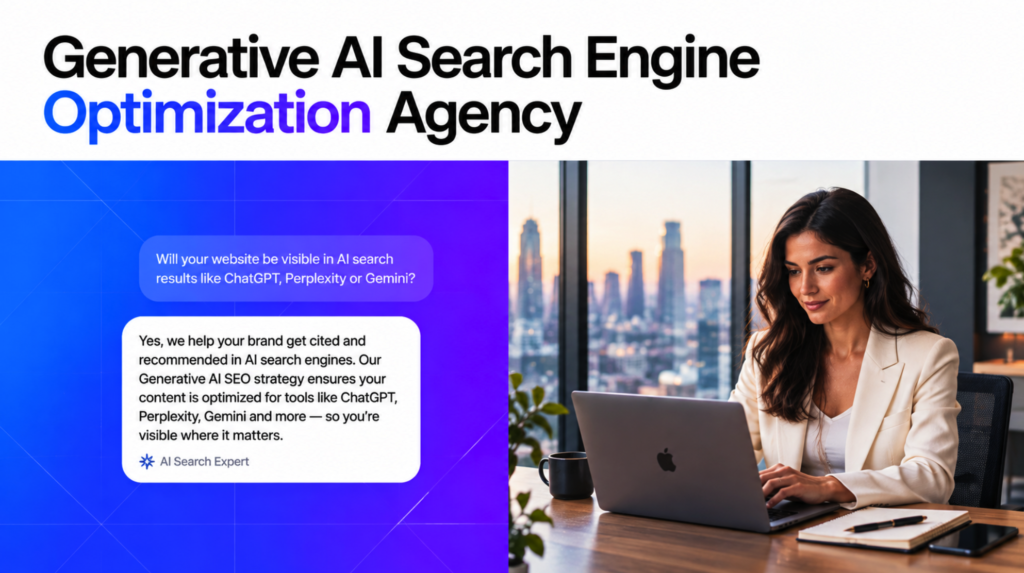
“Generative engine optimization” has become one of the most-searched new categories in marketing this year, and a wave of agencies have rushed to package it as a standalone service. Looking across how a dozen of them describe what they actually deliver, a clear pattern shows up — and so does a gap worth pointing out plainly.
If you’ve been quoted $5,000 a month for an “AI visibility audit” and still don’t know what you’re actually paying for, this is worth reading before you sign anything.
What GEO Agencies Say They Do
Strip away the branding, and most generative AI search engine optimization agencies describe a similar service stack: AI visibility audits, entity and knowledge-graph alignment, structured content for LLM retrieval, and digital PR or third-party mentions. Some frame GEO as a completely separate discipline from SEO — one agency draws the line as SEO targeting keywords and backlinks, while GEO optimizes for how large language models interpret and cite content.
That distinction is real at the edges — schema markup and LLM-readable structure genuinely are newer additions. But look closely at the service lists, and one line item shows up in nearly every one: digital PR and third-party mentions. That’s link building, in newer language.
The Part Nobody’s Pricing Separately
Here’s the gap worth naming directly: most GEO agencies bundle “citation authority” and “digital PR” into a broader retainer priced for enterprise budgets — commonly $3,000 to $15,000+ a month once audits and entity mapping are added in. For a small or mid-sized SaaS company, that price tag makes AI visibility sound out of reach.
But the actual mechanism driving most of the citation-earning work — a brand being mentioned, in context, on sites an LLM already treats as credible — is exactly what link building and guest posting have always done. Entity optimization and schema matter, but they sit on top of genuine third-party mentions, not in place of them.
Why This Gap Matters
The stakes are already measurable. Testing across SaaS companies found a large share of brands ranking well on Google are completely missing from the same queries asked inside ChatGPT — a gap that has nothing to do with traditional rankings and everything to do with whether a brand has been mentioned on sources an LLM draws from. This is the exact problem covered in more depth in this piece on guest posting for AI visibility — a brand missing from that mention graph doesn’t get a runner-up spot the way it might on page one of Google.
What Actually Drives an AI Citation
A few things consistently matter more than the rest:
- Being named on trusted sites first. Structured content helps a model parse a page once it’s there — but the model has to encounter the brand somewhere credible first. That’s a mentions problem before it’s a formatting one.
- Context, not just a link. A mention that names the brand and clearly explains what it does reads far easier to an LLM than a generic anchor buried mid-paragraph.
- Genuine third-party authority, the same standard behind what makes a backlink actually last rather than disappear in a year.
- Depth over volume — a handful of well-placed mentions on genuinely authoritative sites outperforms a large batch of thin, low-context ones, the same principle covered in this guide on what actually makes a backlink strong.
None of this needs a proprietary AI crawler tool to start. It needs the same manual, white hat process that’s always driven durable rankings, pointed at a newer goal.
What to Check Before Paying for a GEO Retainer
- How much of this is genuinely new work, versus digital PR repackaged at a markup?
- Can you see a verified AI citation, not just a general visibility score?
- Is content structure work separable from the placement work, so you’re not paying enterprise rates for both if you only need one?
- Is AI visibility treated as an extension of SEO, or billed as a fully separate budget line?
Google’s own guidance on link best practices is a useful baseline here too — a mention that makes sense in context, on a relevant page, is exactly what both traditional rankings and AI citation graphs reward. That standard covers most of what a GEO retainer charges for.
A More Realistic Starting Point
For a SaaS company that can’t justify a five-figure GEO retainer, the practical move is treating AI visibility as an extension of an existing link building plan — prioritizing genuinely authoritative sites, writing guest content that names the brand clearly, and tracking which mentions actually turn into AI citations over time. Turnaround matters here too — a faster placement workflow means visibility building starts sooner rather than sitting in a months-long onboarding queue.
This is the approach behind how Linqivo structures guest posting for SaaS clients — the same vetted process used for traditional rankings, aimed at the mention-graph signals AI systems increasingly rely on, with transparent reporting on every placement. Pricing for a program built this way is on the pricing page; specific questions are worth asking directly through contact.